Whiskey Barrel Weekend in Coeur d'Alene: What a Master Class Taught Us About Tasting
Some whiskey events are a room full of tables and plastic cups. The Coeur d'Alene Resort's Whiskey Barrel Weekend, presented with Maker's Mark, is not that. We spent September 18 and 19 on the lake in North Idaho, and it was one of the best-run spirits weekends we've been to. Here's what it was like, and the one thing from the master class that changed how we taste.
Friday: Fuego & Oak
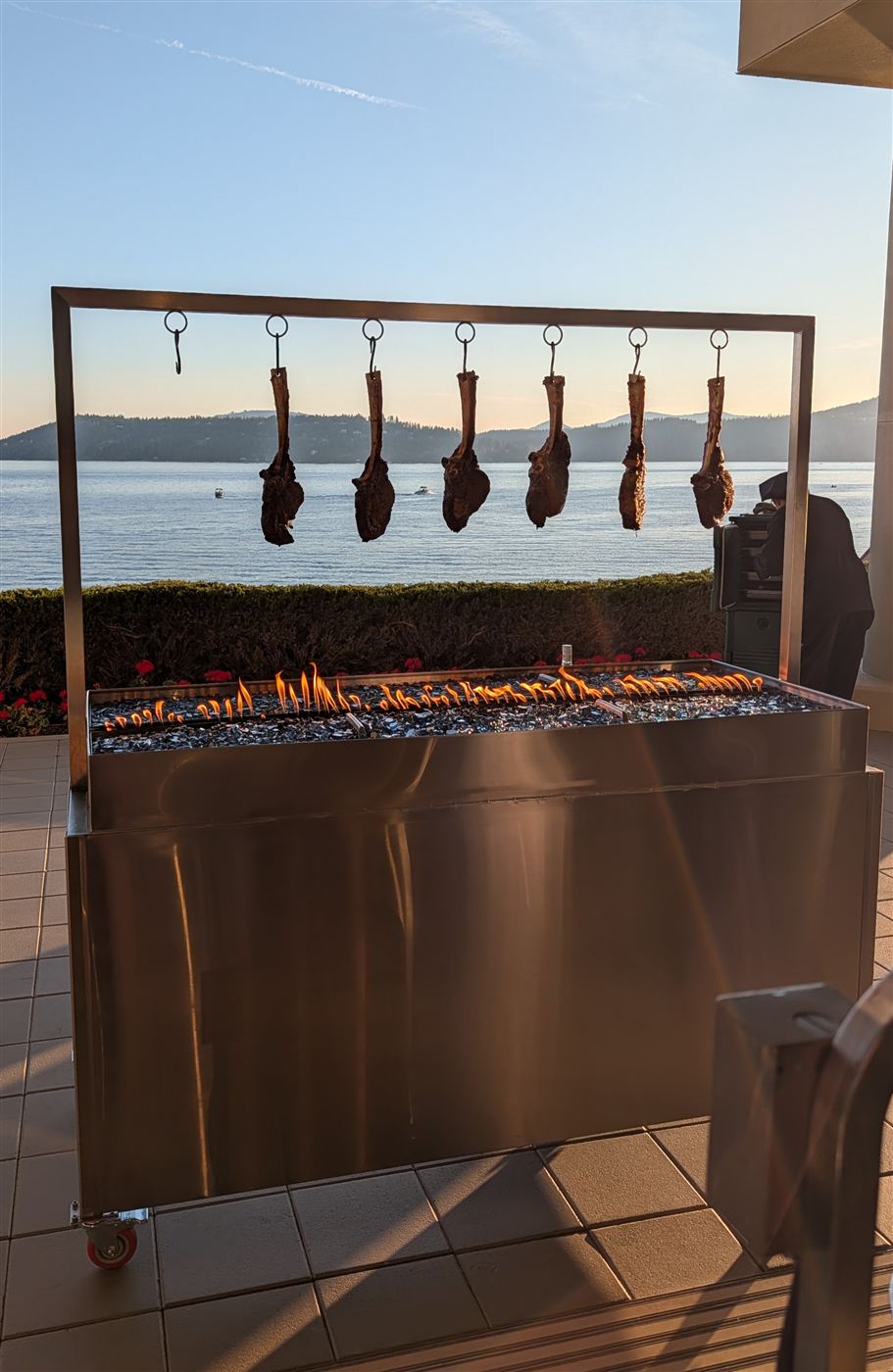
The weekend opened with Fuego & Oak at the Hagadone Event Center: tomahawk steaks hung over an open flame grill on the terrace with Lake Coeur d'Alene behind them, tacos, small bites and appetizers going around, and a 120-proof pour to match. It's the kind of evening that sets a high bar for the rest of a weekend, and the rest of the weekend cleared it.
Saturday: the Whiskey Master Class
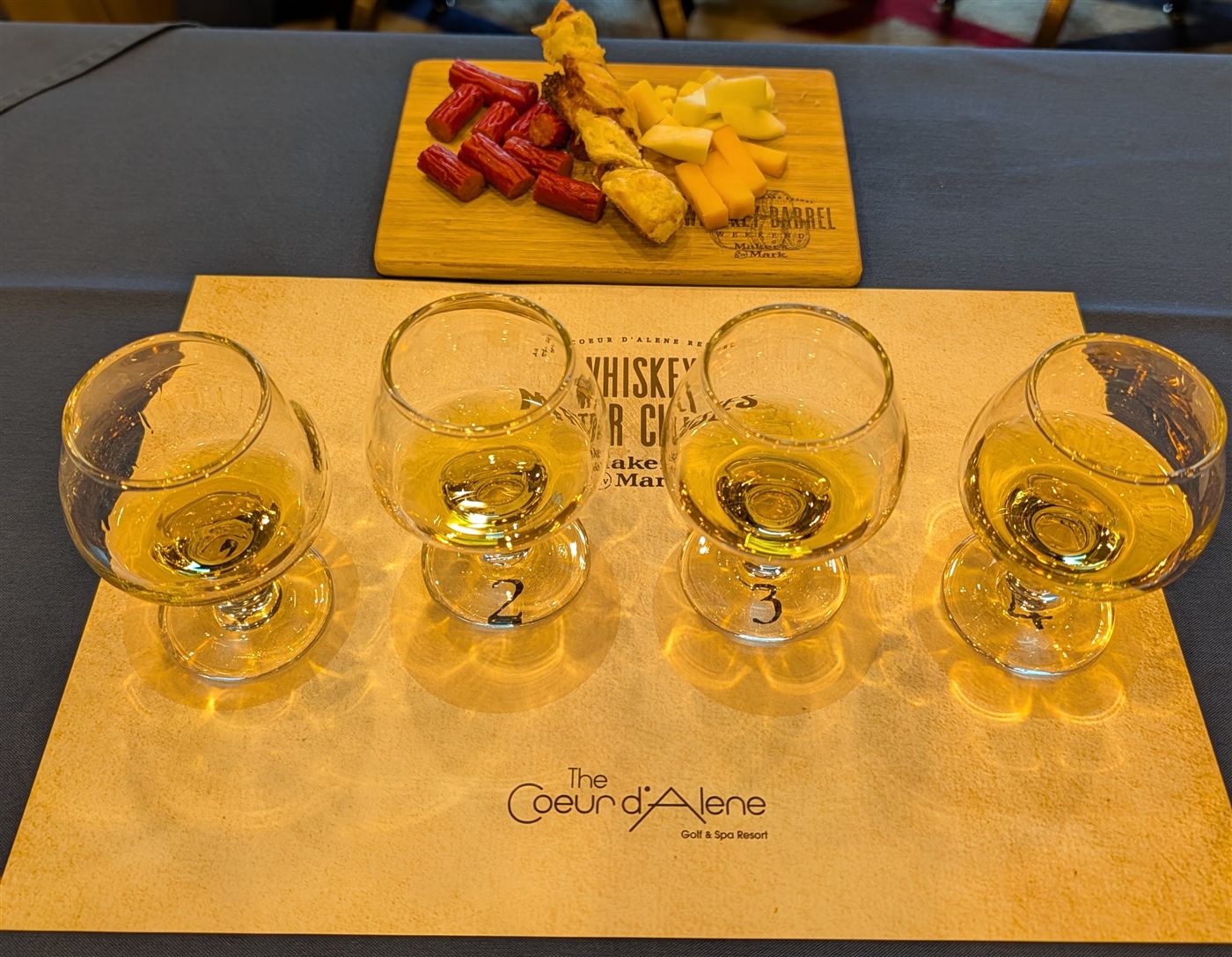
The master class was the highlight. An hour, a four-glass flight served blind, a board of smoked provolone, gouda, and cheddar with whiskey cheese straws, and a presenter who started with the basics and ended somewhere we didn't expect.
How we taste whiskey
The class opened by taking tasting apart into three pieces:
- Taste. Five of them: sweet, salty, bitter, sour, and umami. And you taste every one of them everywhere on your tongue. The old "tongue map" with sweet on the tip and bitter at the back is a myth.
- Feeling factors. The sting of mustard, the burn of chili, the tingle of carbonation, the cool of menthol. These aren't tastes; they're sensations. In whiskey, the warmth of alcohol lives here, which is why proof changes how a whiskey feels as much as how it tastes.
- Aroma. This is the big one: most of what we call taste is smell. Aromas reach you through your nose directly, and through the back of your mouth as you sip and swallow.
That last point is the practical one. If most of the flavor is aroma, then anything that opens up the aroma opens up the whiskey. It's the whole reason a few drops of water can transform a high-proof pour, and we did the math on exactly how few drops in How Much Water Does a Cask-Strength Rye Need?
The part that floored us: Japanese whisky
We walked in expecting bourbon. We walked out talking about Japan. The class covered the House of Suntory's three distilleries: Yamazaki, near Kyoto, Japan's oldest whisky distillery, founded in 1923; Hakushu, in the Japanese Southern Alps, since 1973; and Chita, Suntory's grain distillery.
Then came the reveal. The four glasses in front of us, tasted blind with nothing but the numbers on the stems, were:
- Yamazaki 12. Launched in 1984, the pioneering single malt from Japan's oldest distillery.
- Bowmore 12. From Islay, Scotland's whisky island, at a distillery running since 1779.
- Baker's 7-Year Single Barrel. A Kentucky bourbon at 107 proof (53.5% ABV), named for Baker Beam.
- Suntory World Whisky Ao. The most interesting idea of the day: one blend built from whiskies of five countries (Japan, Scotland, Ireland, the US, and Canada), drawn from seven distilleries, each chosen for a job. Rich smoke from Scotland, bright vanilla from Kentucky, softness from Canada, and the Japanese malts pulling it together.
Tasting blind is the fastest way to find out how much the label does your thinking for you. With no bottle to look at, you're left with aroma, taste, and feel, which is exactly the three-part method the class opened with. We'd recommend trying it at home with a friend pouring.
Ao is blending as an art form, and it's the same principle behind a solera, working across continents instead of across years. If that idea hooks you the way it hooked us, How a Solera Works digs into the math of blending, and the Blend tab on our free calculators works out what any two whiskeys make when you combine them.
Saturday night: the Grand Whiskey Tasting
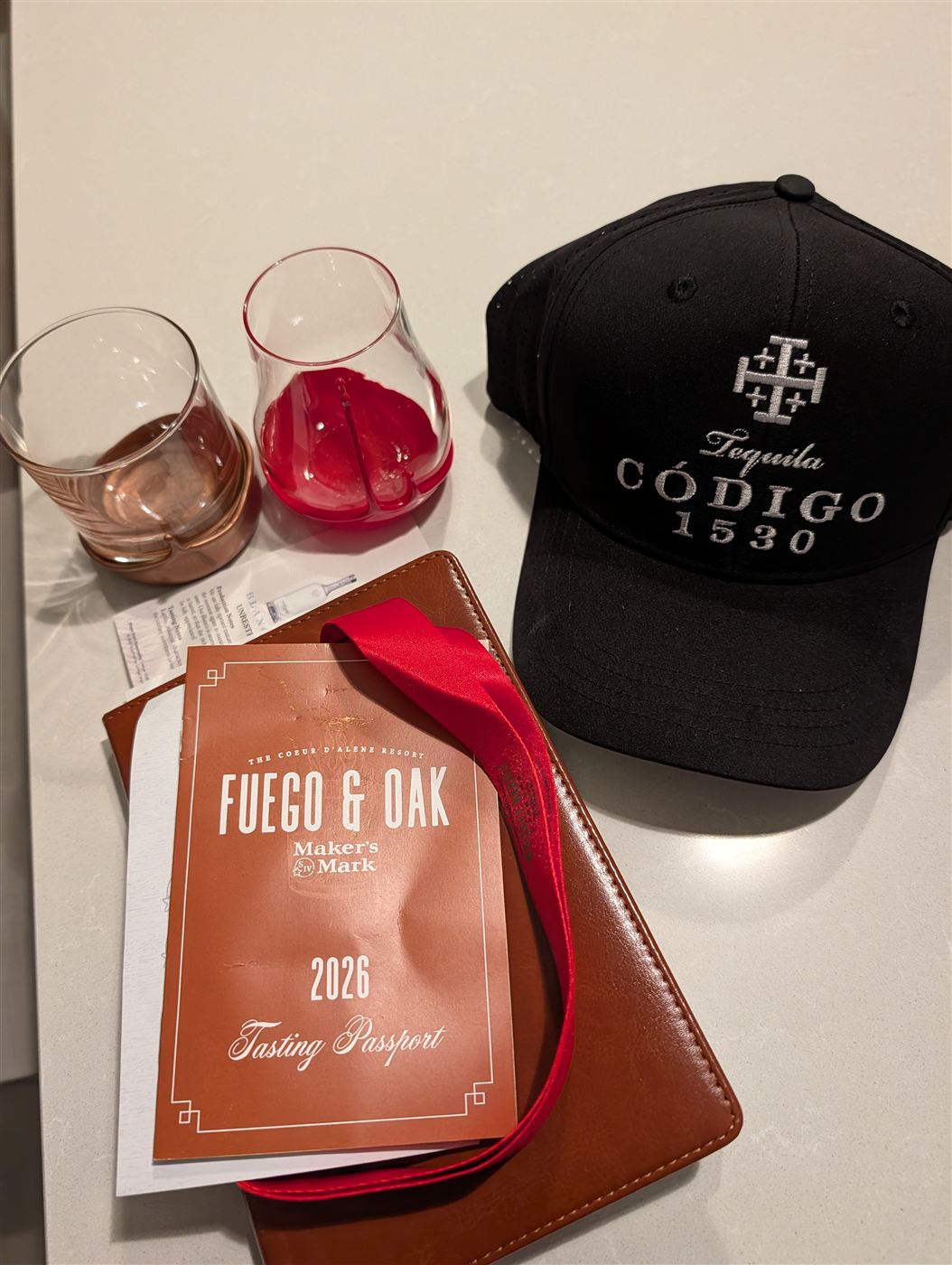
The Grand Whiskey Tasting was the ballroom finale: more than 50 premium whiskeys, a custom tasting glass, and a passport good for ten tastings plus three high-end pours. It played like speed dating for whiskey, moving table to table, with food stations built around the pours, from a loaded potato martini bar to bourbon BBQ sliders and flaming whiskey cavatappi finished tableside in a whole wheel of Parmesan. The cheese board even had Tillamook smoked cheddar, a nice Northwest touch.
Worth the trip?
Yes. The venue, the food, and the pacing were all a step above, and the master class taught us something we're still thinking about. The resort has run Whiskey Barrel Weekend for years; if it's on again next September, it's well worth a drive to Coeur d'Alene. Details on the Whiskey Barrel Weekend page.
This post isn't sponsored. Photos are our own. Whiskey facts and details come from the master class presentation and the resort's published menus. Enjoy responsibly, and don't drive after a tasting.
Home distillation legality varies by country and region. Check your local, state, and federal rules before you start. This content is for informational and educational purposes only and is not legal advice. Calculator outputs are planning estimates, not lab measurements.
Comments
Post a Comment